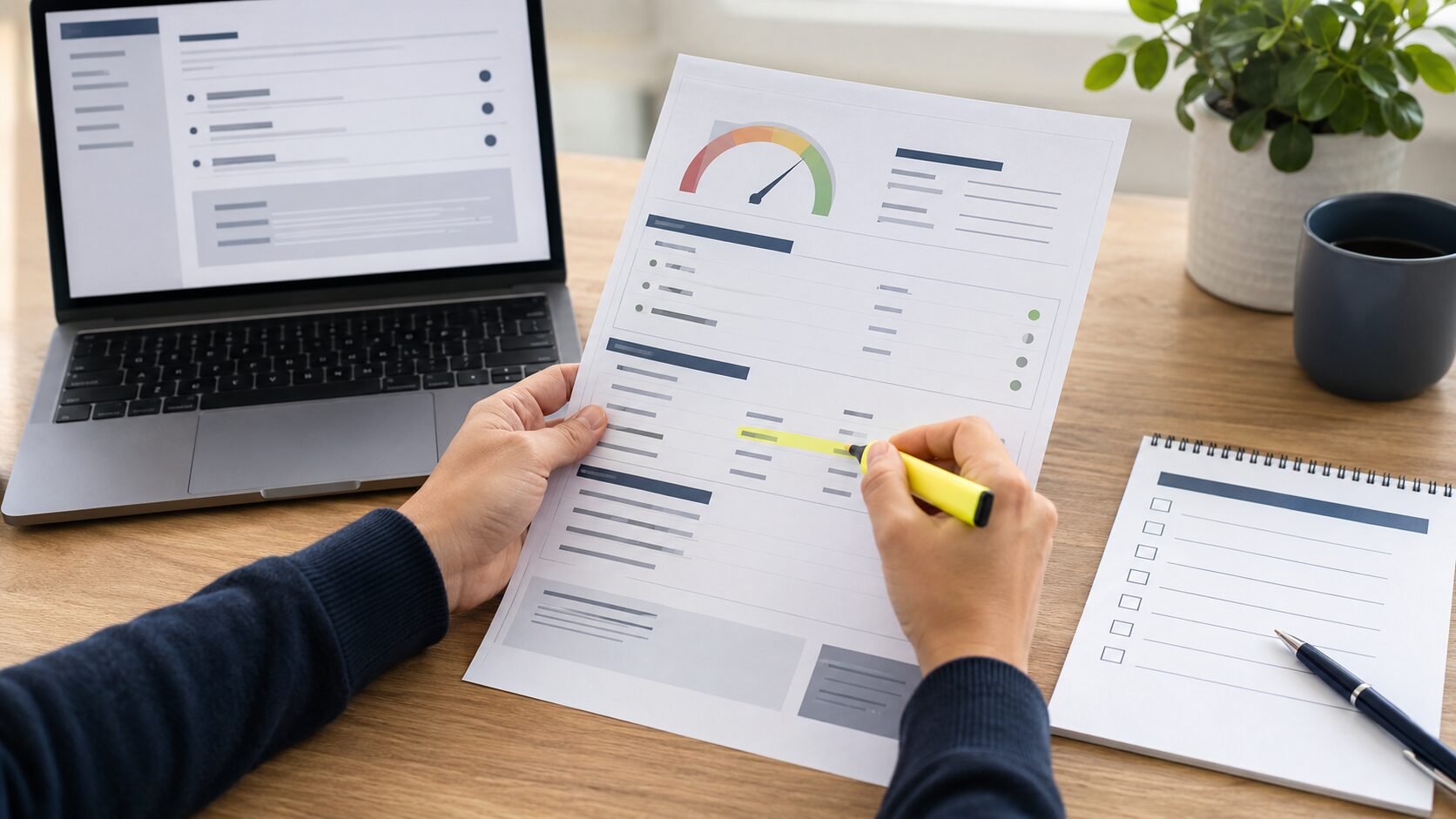
Quick Answer: To read your credit report PDF, check five areas in order: personal information, account history, bankruptcy or other negative items, credit inquiries, and the credit summary. Look for accounts you do not recognize, wrong balances, late payments, unfamiliar addresses, and hard inquiries you did not authorize. If something is wrong, dispute it with the bureau reporting it and attach proof.
Learning how to read your credit report PDF is easier when you follow the same order every time. The goal is to catch errors, identity-theft clues, outdated negatives, and risky balances.
Credit Report vs. Credit Score: What’s the Difference?
Your credit report is the full record. Your credit score is the number calculated from that record.
Think of the report like a school report card. It lists cards, loans, balances, payment history, collections, inquiries, and bankruptcy data if any appears. The score is like the GPA created from that information.
A score problem often starts as a report problem. A wrong late payment, duplicate collection, incorrect balance, or account that is not yours can affect the score.
If you are learning how to read your credit score, start with the report first. Standard U.S. FICO and VantageScore models generally use a 300-to-850 range, not 900. One incorrect late payment deserves attention.
How to Read a Credit Report PDF: The 5-Step Map
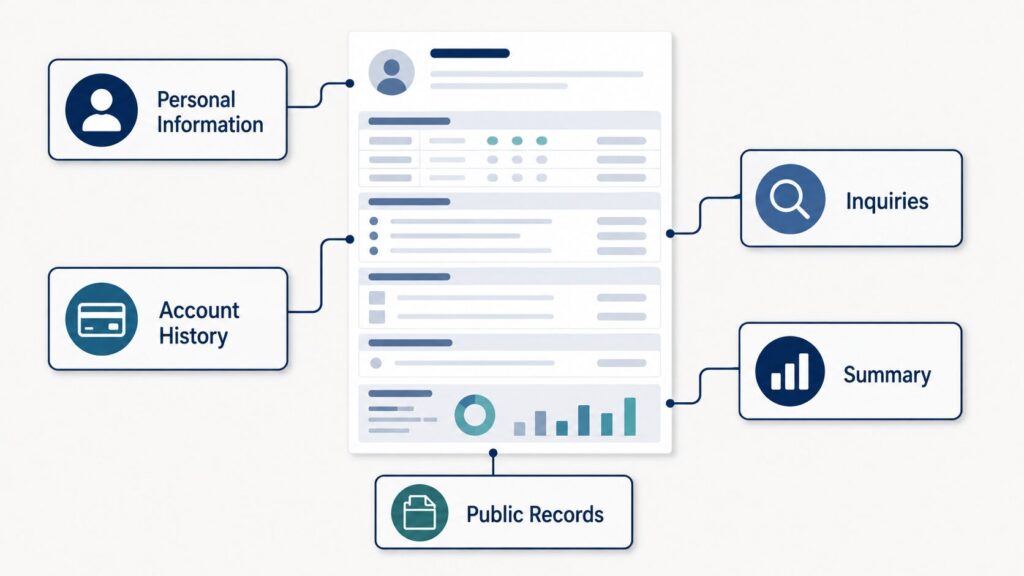
How to read a credit report PDF is similar across Equifax, Experian, and TransUnion. Use this as a credit report for dummies checklist.
Step 1: Check Personal Information
Check your name, old and current addresses, date of birth, last four Social Security digits, phone numbers, and employer names if shown. An address where you never lived can point to a mixed file or identity-theft risk.
Step 2: Review Account History and Account Mix
The account section matters most because it shows payment behavior, balances, limits, and status.
| Account Type | Examples | What to Check |
|---|---|---|
| Revolving | Credit cards, store cards, lines of credit | Balance, limit, payment history |
| Installment | Auto loans, mortgages, personal loans | Loan status, monthly payment, late marks |
A high card balance can hurt even if you pay on time. Test payoff options with a credit card payoff calculator.
Step 3: Check Negative Items and Bankruptcy Data
Modern credit reports usually do not show many public records. The main public-record item to watch for is bankruptcy.
Also check for late payments, collections, charge-offs, repossessions, foreclosures, and accounts marked included in bankruptcy.
Most negative account information can generally stay on a report for up to seven years. Bankruptcy can stay for up to 10 years. Check the original delinquency date, filing date, account status, and balance before disputing.
Step 4: Review Hard and Soft Inquiries
A hard inquiry usually appears after a credit application and may affect your score. A soft inquiry happens when you check your own credit, receive a preapproval, or an existing lender reviews your account. It does not hurt your score.
For anyone learning how to read a TransUnion credit report PDF, this section may look crowded. A hard inquiry plus a new account you never opened is a stronger fraud warning.
Step 5: Check Timelines Before You Dispute
Dispute when an item is wrong, outdated, duplicated, incomplete, or not yours.
| Item | Typical Reporting Timeline |
|---|---|
| Late payments | Up to 7 years |
| Collections | Up to 7 years |
| Charge-offs | Up to 7 years |
| Chapter 7 bankruptcy | Up to 10 years |
| Hard inquiries | Often about 2 years |
Credit Report Symbols and Codes Cheat Sheet
Credit report codes vary by bureau and lender, but these are common symbols you may see.
| Code | Meaning | Why It Matters |
|---|---|---|
| OK / 1 | Paid on time | Positive payment record |
| CO | Charge-off | Serious negative status |
| ND | No data reported | Usually neutral |
| 30 / 60 / 90 | Days late | Late-payment severity |
| MOP | Method of payment | Account status code |
| COL | Collection | Debt sent to collections |
| IIB | Included in bankruptcy | Part of bankruptcy |
| R | Revolving | Credit card or credit line |
| I | Installment | Fixed-payment loan |
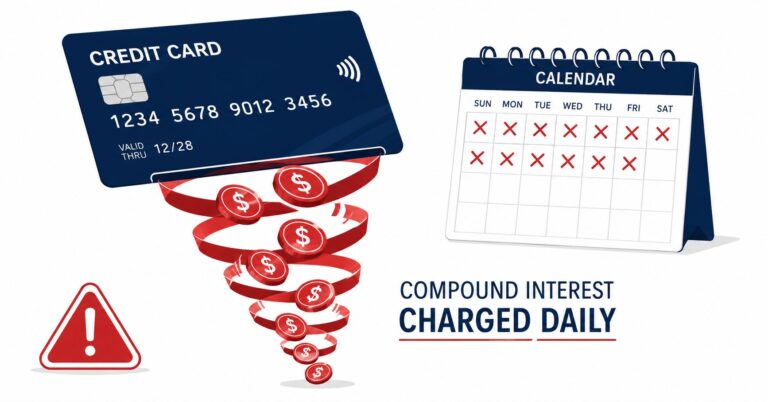
Do not dispute a code just because it looks scary. Dispute it only when the account is inaccurate, outdated, unverifiable, or not yours. If a card balance seems to grow after payments, review how credit card compound interest works before assuming the bureau made a balance error.
What Lenders Check Before Approval
How to read a credit report for lenders means looking beyond the score. Banks scan payment history, card utilization, recent late payments, collections, charge-offs, hard inquiries, new accounts, total debt, and credit age.
What is a good score on your credit report? A FICO score around 670 or higher is often considered good, but lenders still review the full file. The 30% utilization rule is a helpful warning line, not a magic cutoff. If preparing for a home purchase, estimate the payment with a mortgage calculator after reviewing the report.
How to Dispute an Error on Your Credit Report
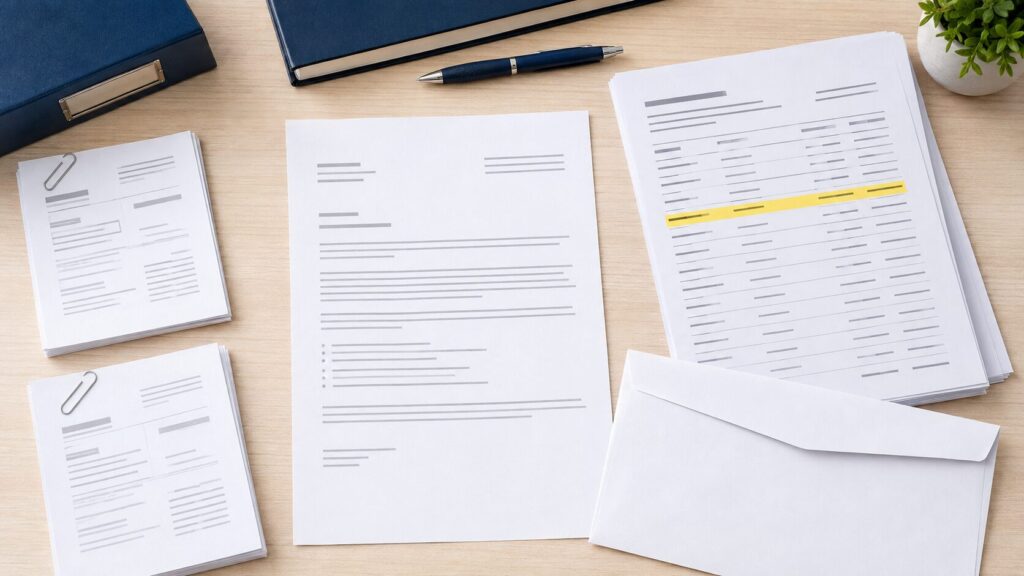
You can get official free weekly credit reports from Equifax, Experian, and TransUnion through AnnualCreditReport.com. Save the PDF before starting a dispute.
Follow these steps: highlight the error, gather proof, file with the bureau reporting it, contact the lender or collector if they supplied wrong data, save copies, and check the updated report after the response window.
Credit bureaus generally investigate disputes within 30 days. Some cases can take up to 45 days.
Credit Report Dispute Letter Template
[Insert Date]
To: [Equifax, Experian, or TransUnion]
Subject: Formal Credit Report DisputeI am disputing inaccurate information on my credit report. I attached a copy of my report with the incorrect item marked.
Disputed item: [Account name and partial account number]
Reason: [Account is not mine / balance is wrong / payment status is wrong / item is outdated]
Requested correction: [Remove item / correct balance / update status]Please investigate and correct or remove any inaccurate, incomplete, or unverifiable information.
Sincerely,
[Your name, mailing address, date of birth, last four SSN digits]
Send copies only, not original documents.
How to Build Credit from Scratch After Fixing Errors
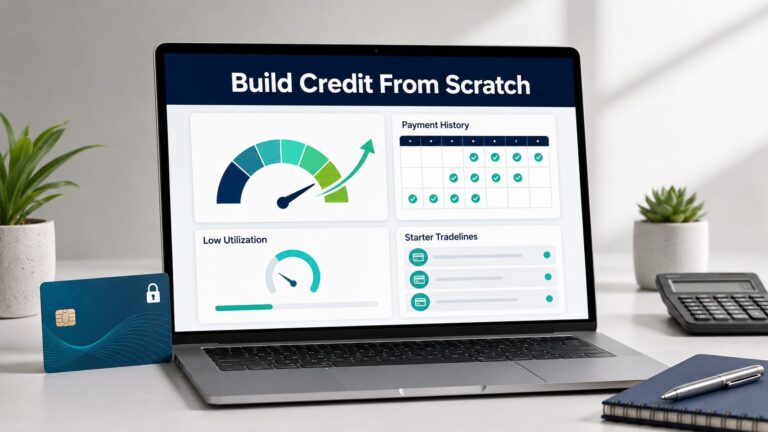
After your report is accurate, build positive history with accounts that report to the credit bureaus. Good options include a secured credit card for beginners, a credit-builder loan, or becoming an authorized user on a trusted person’s old account. For a fuller plan, use this guide to build credit from scratch.
A 450 credit score is usually poor, but it can improve with accurate reporting, on-time payments, lower balances, and time. A 700 credit score has no fixed dollar value; its benefit depends on the loan, rate, landlord, insurer, or lender reviewing your file.
Common Mistakes
Only checking one bureau can miss errors. Ignoring personal information can hide mixed-file or identity-theft clues. Disputing accurate negative items without proof usually wastes time. Closing old accounts without checking utilization can hurt your profile.
Quick Summary
- Your credit report is the history; your score is calculated from it.
- Review personal details, accounts, negative items, inquiries, and timelines.
- Standard FICO and VantageScore models generally top out at 850.
- Codes like CO, COL, 30, 60, and 90 can signal serious negative history.
- Lenders focus on payment history, utilization, recent delinquencies, and debt load.
- Dispute wrong, outdated, duplicated, incomplete, or unverifiable items.
- After fixing errors, build credit with simple accounts and on-time payments.
Frequently Asked Questions
How does a lender read a credit report differently than a consumer?
Consumers usually check the surface score first. Lenders skip aesthetics to scan deep utilization metrics, payment consistency across individual months, public tax judgments, and recent hard inquiry clusters to gauge real risk.
Can you build credit from scratch if your credit history is completely blank?
Yes. If your file is blank, you can build credit from scratch by opening a secured credit card line, applying for specialized credit-builder banking products, or tracking your positive monthly utility payments.
What is the most important section to check when reading a credit report PDF?
The account history section is most important because it shows balances, account ownership, payment history, and negative marks.
Is the credit score scale up to 850 or 900?
Standard U.S. FICO and VantageScore models generally go up to 850. A 900 score usually comes from a specialized or non-standard model.
How can I safely get a free credit report?
Use AnnualCreditReport.com for official reports from Equifax, Experian, and TransUnion. Avoid lookalike sites that sell unnecessary add-ons.
What do CO and 90 mean on a credit report?
CO means charge-off. A 90 code usually means the account was reported 90 days late. Both are serious if accurate.
How long does a credit report dispute take?
Most disputes are investigated within 30 days. Some cases can take up to 45 days when extra information or certain report-access rules apply.
Managing Your Financial Report Card
Download all three reports, mark anything that looks wrong, and take one next step: dispute an error, lower a high balance, or open a safe credit-building account. A cleaner report can improve your chance of qualifying for better terms, though approval is never guaranteed.
Reviewed by: The Finance Orbit Editorial Team
Reviewed and updated: August 8, 2026
Disclaimer: This article is for general educational and informational purposes only and does not constitute financial, investment, tax, legal, insurance, or credit advice. Products, rates, laws, limits, eligibility rules, and terms can change. Verify current information and consult a qualified professional for advice specific to your circumstances.